How Do You Choose an Industrial Hose for Suction and Discharge?
Choosing an industrial hose for suction and discharge starts with six measurable items: media, hose ID, vacuum, working pressure, temperature, and coupling type. A 3-inch hose has about 7.1 in² of internal area, while a 4-inch hose has 12.6 in², roughly 78% more flow area before friction losses are considered. Suction service also needs a rigid helix because atmospheric pressure can approach 14.7 psi at sea level when the hose operates near full vacuum. Discharge service places the hose wall under positive pressure instead. Chemical compatibility, abrasion, bend radius, static conductivity, and assembly ratings then determine whether the hose can remain in service safely.
A suction hose and a discharge hose may look similar from several feet away, but the wall structure works differently. During discharge, internal pressure pushes the tube and reinforcement outward. During suction, atmospheric pressure pushes inward as the pump lowers pressure inside the hose. At sea level, atmospheric pressure is about 14.7 psi, so a hose approaching a 29 inHg vacuum must resist substantial external compression across its entire circumference. A 4-inch hose also exposes a larger wall area to that force than a 2-inch hose.
A hose marked for 150 psi working pressure is not automatically suitable for near-full-vacuum suction. Pressure resistance and vacuum resistance come from different parts of the hose construction.
That difference is why suction-and-discharge hoses normally include a steel-wire or rigid polymer helix in addition to textile reinforcement. The helix helps keep the bore round when internal pressure falls below atmospheric pressure, while textile plies or wire reinforcement contain positive discharge pressure. Manufacturers may publish vacuum performance in inches of mercury, bar, or percentage vacuum. A 29 inHg rating is close to full atmospheric vacuum under normal sea-level conditions, while a hose rated for only 20 inHg should not be treated as equivalent.
Material compatibility comes next because the tube is in continuous contact with the transferred fluid. EPDM is widely used for water, many dilute acids and alkalis, and outdoor service, but it is generally unsuitable for petroleum oils. NBR is commonly chosen for oil and fuel transfer because its resistance to hydrocarbons is substantially better. PVC works well in many water, irrigation, light chemical, and general-purpose applications, although low temperatures can reduce flexibility.
| Service medium | Common tube choice | Main item to verify |
|---|---|---|
| Water / wastewater | EPDM, PVC | Temperature, vacuum |
| Petroleum oils | NBR | Aromatic content, temperature |
| Mild chemicals | EPDM, PVC, specialty compounds | Concentration, compatibility chart |
| Abrasive slurry | Abrasion-resistant rubber | Tube thickness, velocity |
| Dry bulk material | Conductive or abrasion-resistant compounds | Static control, wear |
Chemical names alone are not enough. A compatibility check should include concentration and temperature because both can change elastomer performance. A compound suitable for a 10% chemical solution at 70°F may not be suitable for a 50% concentration at 150°F. Hose manufacturers therefore publish chemical-resistance tables based on specific compounds rather than broad labels such as “rubber hose.” When service chemistry varies during cleaning or flushing, the cleaning fluid also needs to be checked.
After the tube compound is selected, diameter should be based on required flow rather than only the pump port. Internal cross-sectional area rises with the square of diameter. A 2-inch circular bore has about 3.14 in² of area, a 3-inch bore about 7.07 in², and a 4-inch bore about 12.57 in². Moving from 3 to 4 inches increases area by approximately 78%, which can lower fluid velocity substantially at the same flow rate.
Lower velocity can reduce friction loss and internal wear, especially with sand, slurry, sludge, aggregate, or other solids. Higher velocity may increase abrasion because particles strike the tube surface more frequently and with greater energy. Hose length matters at the same time: 100 ft of hose creates more friction than 20 ft of the same ID, so a pump that works well with a short discharge line may lose flow after a long hose is installed.
Diameter should be checked against flow rate, hose length, fluid viscosity, elevation, elbows, valves, and fittings rather than copied from the pump connection.
Pressure selection follows a similar rule. The published working pressure, not burst pressure, is the service limit used for normal operation. A hose rated at 150 psi working pressure should not be operated at 200 psi because its laboratory burst pressure happens to be much higher. Hose standards and manufacturers often apply design ratios between working and burst pressure, but the ratio varies by construction and applicable standard.
Pressure surges also need allowance. Rapid valve closure can create water hammer, raising system pressure above the steady gauge reading for a short period. In a line operating at 100 psi, a surge does not have to last several minutes to damage reinforcement or fittings. Pump shutoff pressure, valve speed, line length, and liquid velocity should therefore be reviewed before selecting the pressure class.
Temperature modifies many of the same limits. Elastomers generally become softer as temperature rises and stiffer as temperature falls. Thermoplastic hoses can show even larger changes in flexibility. A hose that bends comfortably at 70°F may become noticeably harder to handle below freezing. At elevated temperature, some manufacturers reduce allowable working pressure, so the pressure printed in a catalog should be checked against the stated temperature conditions.
Service temperature must include both fluid and surroundings. A wastewater hose carrying 80°F liquid outdoors can still face a cover temperature above 120°F in summer sun, while winter operation may expose it to temperatures below 32°F. In 2024-era industrial hose catalogs, manufacturers still specify separate temperature ranges by compound because one universal rubber temperature limit does not exist.
Abrasion becomes more important once media, diameter, pressure, and temperature have been narrowed down. Internal abrasion comes from particles moving through the bore; external abrasion comes from dragging, rubbing, or repeated contact with equipment. A hose used on a construction pump may contact gravel, concrete, steel edges, and vehicle beds several times per shift.
For abrasive transfer, thicker does not automatically mean better. The tube compound, hardness, elasticity, particle size, fluid velocity, and bend geometry all affect wear. A sharp bend can concentrate particle impact on the outside radius. If a hose operates for 8 hours per day and is dragged across concrete 10 times per shift, cover wear can become a service-life issue even when pressure remains well below 50% of the published rating.
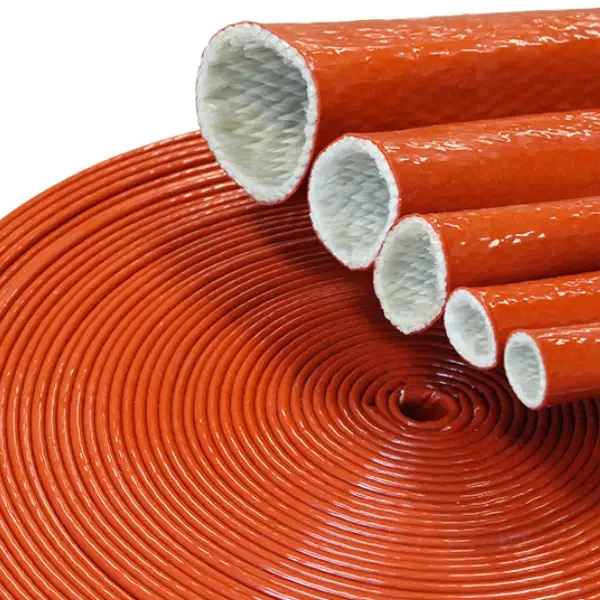
External protection can help where movement cannot be removed from the installation. Products such as Kingdaflex hose protection products can be considered where hoses repeatedly contact floors, machine frames, edges, or other abrasive surfaces. Protection should not cover damage that already requires hose replacement, and it should not force the hose below its specified minimum bend radius.
Bend radius is often missed because it is less visible than pressure or diameter. Every reinforced hose has a minimum bend radius measured at the inside of the bend or according to the manufacturer's stated method. Bending tighter can flatten the bore, shift reinforcement, and place uneven stress on the wall. In suction service, even a moderate loss of roundness can reduce vacuum resistance because atmospheric pressure acts more easily on a deformed cross-section.
A hose should also not be installed under twist. A 90° twist combined with repeated pressurization can force reinforcement to move in ways not intended by the construction. On moving equipment, enough hose length should be provided for motion, but excess length should not be added without reason because additional footage increases weight and pressure loss.
Couplings need the same level of review as the hose. Cam-and-groove fittings are common in water, chemical, agricultural, and general transfer service, while flanges, combination nipples, threaded fittings, and proprietary systems are used elsewhere. The fitting must match hose ID, hose OD, wall construction, media, pressure, temperature, and the selected attachment method.
A complete assembly can only be rated to its lowest-rated part. A 250 psi hose connected to a fitting system rated for 150 psi should be treated as a 150 psi assembly unless the assembly manufacturer provides another verified rating. The same principle applies to gaskets. An EPDM gasket may work well with water but may be unsuitable for petroleum service, while an NBR gasket can be a better match for many oils.
Electrical properties also matter in petroleum, dry bulk, powder, and some chemical applications. Flowing material can generate static charge. A steel helix inside the hose does not automatically guarantee electrical continuity from one coupling to the other. Conductive hose compounds, embedded bonding wires, coupling contact, and grounding arrangements should be checked as a complete assembly.
Static requirements vary by application and industry. Where electrical continuity is specified, resistance should be measured rather than assumed. A hose can look unchanged after 12 months of service while corrosion, damaged bonding wires, or poorly installed couplings alter its electrical path, so periodic inspection has more value than relying only on the original specification.
Inspection frequency should match service severity. A hose operating 5 days per week on abrasive slurry deserves more frequent checks than one used monthly for clean water. Inspect the cover for cuts, exposed reinforcement, soft spots, blistering, flattening, coupling movement, leakage, and permanent kinks. Any hose that has experienced unusual overpressure, chemical exposure, crushing, or severe heat should receive additional inspection before reuse.
A practical purchase specification can be reduced to measurable fields rather than general descriptions:
-
Fluid name, concentration, and solids content
-
Required flow rate and hose ID
-
Total hose length and elevation change
-
Maximum vacuum in inHg, bar, or percentage
-
Normal and maximum discharge pressure
-
Expected surge pressure
-
Minimum and maximum fluid temperature
-
Minimum and maximum ambient temperature
-
Minimum bend radius available in the installation
-
Indoor, outdoor, UV, abrasion, or marine exposure
-
Static-conductivity requirement
-
Coupling type, material, seal material, and attachment method
If a system requires 4-inch ID, 100 psi continuous discharge pressure, 28 inHg suction, 150°F fluid, and outdoor operation, every figure belongs in the purchase specification. Replacing that description with “4-inch heavy-duty suction hose” removes most of the information needed to select the construction.
The final comparison should therefore be made from manufacturer data sheets, chemical-compatibility information, pressure and vacuum ratings, and assembly instructions. Published values from the 2020s often differ even between hoses with the same nominal ID because reinforcement count, helix material, wall thickness, and compound formulation vary. Two 3-inch hoses can share the same dimensions while having working-pressure ratings that differ by 50% or more.
Selecting by service data also makes replacement easier. When the operating record contains medium, pressure, vacuum, temperature, dimensions, fittings, and service conditions, another qualified hose can be evaluated against the same measurable requirements instead of relying on appearance or brand familiarity.